Summer Church Signs: What Are The Best Sayings And Ideas For The Season?

Alpha LED sign boards are great for anything from churches, to schools, to business. They tend to do great in large open spaces, where they are clearly visible.

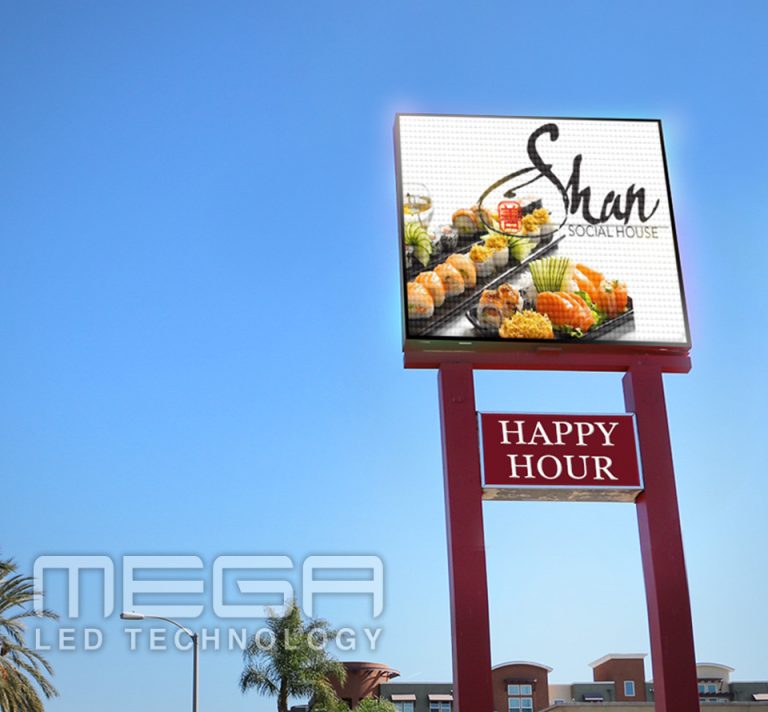
Omega is our newest line of outdoor digital signs. Running the full gambit from cabinet, to LED sign, to logo on top, or any configuration of your choice!

Premier is a customizable Outdoor LED sign, perfect for the Entrepreneur who knows that large custom sized signs cultivated for their specific business is the way to go.

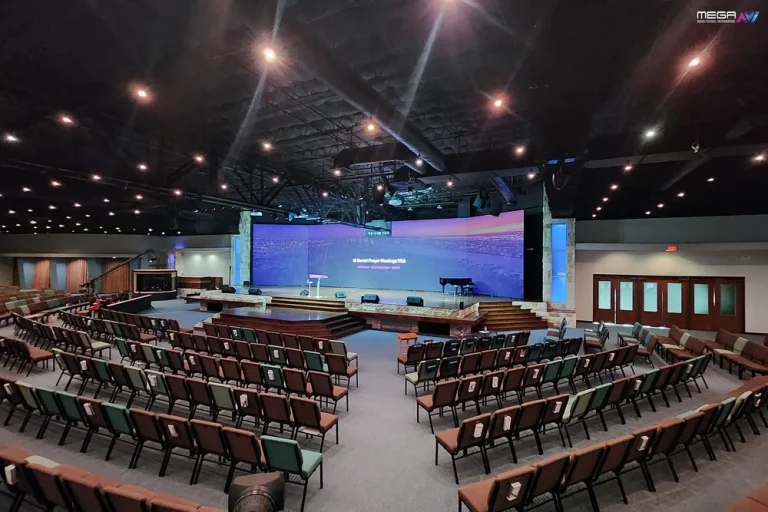
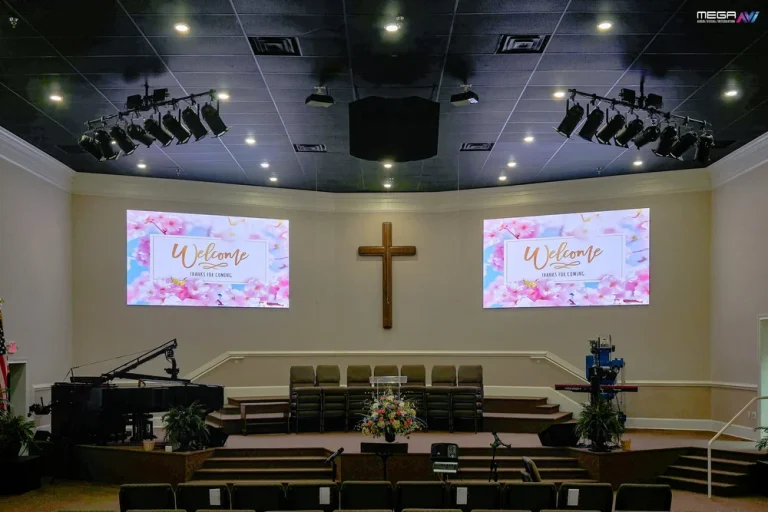
Programmable Stage LED signs, great for indoor assemblies, congregations, and presentations! Blow your competitors out of the water, or keep your congregation and audience glued to your message.

Alpha LED sign boards are great for anything from churches, to schools, to business. They tend to do great in large open spaces, where they are clearly visible.
Omega is our newest line of outdoor digital signs. Running the full gambit from cabinet, to LED sign, to logo on top, or any configuration of your choice!
Premier is a customizable Outdoor LED sign, perfect for the Entrepreneur who knows that large custom sized signs cultivated for their specific business is the way to go.
Programmable Stage LED signs, great for indoor assemblies, congregations, and presentations! Blow your competitors out of the water, or keep your congregation and audience glued to your message.
SMD LED requirements appear across modern lighting products, but the term can feel vague, leaving buyers unsure whether it matters. That uncertainty leads to poor decisions, overpaying for unnecessary features or choosing underperforming options because the specs seem confusing. Once you understand what SMD means, how SMD types differ, and how to read size codes, comparing products becomes straightforward. This guide explains SMD in simple terms, covers common sizes and types, and contrasts SMD LEDs with regular LEDs.

SMD LEDs are surface-mount light-emitting diodes. SMD means Surface Mounted Device, and these LED chips attach directly to printed circuit boards rather than using wire leads that pass through holes.
Product descriptions employ SMD LED nomenclature to denote contemporary LED construction. SMD indicates that lighting products employ chip-based LEDs rather than individual LEDs. This is important because SMD technology is brighter, more efficient, and lasts longer.
Most high-quality LED lighting products use SMD construction, thus the word counts. Due to their tiny size, flexibility, and dependability, SMD packages dominate commercial and architectural lighting.
SMD LEDs are Surface Mounted Device Light Emitting Diodes. This term describes the mounting method and light source type with each word adding meaning.
The attachment method is surface-mounted. Instead of wire leads through holes, solder paste flattens the LED chip on the circuit board. Surface mounting was developed in electronics to make smaller, more reliable devices.
The device includes the LED chip, electrical connectors, and protective housing. Light Emitting Diode semiconductor technology produces light when electrical current runs through it. SMD LEDs are new, small light sources for direct board installation.
Surface mounting allows LED strip lights, small panel fixtures, and compact electronic displays, making this construction practical. According to RayPCB research, SMD integration permits high-density placement on circuit boards, providing powerful light sources in limited area that would be unachievable with conventional LED packaging technologies.
Commonly, SMD light means modern LED lighting. People know this phrase in product descriptions denotes current-generation LED technology, not incandescent or fluorescent.
SMD lights mainly refer to LED strip lights, new bulbs, or fixtures with chip-based LEDs. Surface mounting accuracy isn’t as important as practicality: SMD devices are bright, long-lasting LEDs.
Technical definitions differ from this popular idea. Engineers are meticulous about mounting and packing requirements. People care about lighting brightness, efficiency, and suitability. Both perspectives are vital, but understanding them may help you grasp product information.
Choose SMD-based products using efficient chips like 2835 for bright, low-power white light.
Choose SMD LED bulbs/fixtures for compact design, higher brightness, and better efficiency than older LED builds.
Choose SMD 5050-based products for true RGB mixing and flexible color control.
Choose through-hole “regular” LEDs for basic indicator use; pick SMD for strips or panels
SMD LEDs are used in almost all modern lighting. Residential uses of SMD LEDs include under-cabinet lights, accent strips, ceiling fittings, and decorative installations. The compact SMD format enables creative placement that is impossible with bulkier traditional lights.
Commercial environments use SMD technology extensively. Retailers display products with SMD strip lighting. SMD panel lights provide efficient general illumination in offices. Restaurants and hotels regulate ambiance with SMD fixtures. SMD strip lighting delivers sufficient lumen output for both task and general illumination, a key reason it has become the standard format for commercial and residential lighting installations.
| Application | Common SMD Type | Why SMD Is Preferred |
|---|---|---|
| Residential accent lighting | 2835, 3528 | Compact size, energy efficiency |
| Commercial task lighting | 2835, 5630 | High brightness, low heat |
| RGB decorative displays | 5050 | Multi-diode color mixing |
| Signage and displays | 2835, 5050 | Uniform illumination, reliability |
| Automotive interior | 3528, 5050 | Compact fit, vibration resistance |
| Stage and entertainment | 5050, 5630 | High output, color options |
SMD’s inherent features make it versatile for household and commercial use. Compact packages fit limited places. Efficiency cuts operating costs. Maintenance is low because of longevity. SMD is the standard for new lighting systems of any size due to these benefits.
We make SMD indoor video walls and stage lights at MEGA LED Technology utilizing superior SMD components. Because we use the optimal SMD types for each application, our displays are bright and accurate.

Conventional LEDs are through-hole LEDs with wire leads. According to Hirosart’s comparison, these technologies’ physical architectures vary greatly.
Traditional LEDs have rounded or domed plastic housings with two wire leads at the bottom. The circuit board holes allow these leads to solder to the other side. SMD LEDs mount flat against the board in a compact rectangular package, eliminating throughholes.
Performance shows SMD technology’s advantage. SMD LEDs work more efficiently, dissipate heat, and produce more light from smaller packages than through-hole LEDs. According to the U.S. Department of Energy, LED technology, including SMD chips, use at least 75% less energy than incandescent bulbs while delivering significantly higher light output per watt, with efficiency continuing to improve as manufacturing advances.
SMD allows things impossible with through-hole construction, making it more modern. Flat-mounting chips are needed for LED strip lights. Ultra-thin fixtures require low component height. Displays with high density require tight chip spacing. SMD technology dominates modern lighting goods because only it can perform these things.
Surface mount technology goes beyond lighting. Modern circuit board assembly for resistors, capacitors, integrated circuits, connections, and LEDs uses SMD fabrication, according to electronics industry standards.
The technology is popular because it lowers manufacturing costs and improves product reliability. Automatic pick-and-place machines precisely install SMD components on circuit boards. Reflow soldering automatically connects all components. Automation makes high-volume production cheaper than through-hole assembly.
Benefits of design encourage SMD usage across sectors. Smaller parts enable thinner products. Shorter electrical paths boost high-frequency performance. Portable gadgets benefit from lighter weight. Better thermal properties boost reliability.
SMD 2835 and 5050 are the most common SMD LEDs. The U.S. Department of Energy’s Solid-State Lighting program recognizes SMD LEDs as the dominant technology in modern commercial and residential lighting, with efficiency and compact form factor driving widespread adoption across product categories.
The 2835 rules efficiency applications. Its 2.8mm by 3.5mm size and high lumens per watt make it ideal for general illumination, strip lighting, and energy efficiency. The 2835 is the more efficient of the two, producing more light relative to its power draw, while the 5050’s larger package accommodates three diodes for full RGB color mixing. This trade-off makes each type suited to different applications.
The 5050 rules color-changing applications. Its larger 5.0mm square package holds three diodes for RGB color mixing in one chip. 5050 is the standard for ornamental lighting, entertainment displays, and customizable color due to its multi-diode capability.
Sizes that are the best engineering compromises dominate. Smaller chips are less brilliant yet more efficient. Larger chips output more but are less efficient. The 2835 and 5050 meet most application needs without high compromises.

Numeric size codes provide the primary identification method for SMD LEDs. According to TehnoBlog, the four-digit numbers indicate package dimensions in tenths of millimeters. SMD 5050 measures 5.0mm by 5.0mm. SMD 2835 measures 2.8mm by 3.5mm.
The numbering system follows consistent logic across manufacturers. The first two digits represent width. The last two digits represent length. Understanding this pattern enables quick size identification even for unfamiliar SMD types. A chip labeled 3014 measures 3.0mm by 1.4mm. A chip labeled 5630 measures 5.6mm by 3.0mm.
Size directly influences performance characteristics. Larger packages generally accommodate more powerful LED dies and handle higher current. Smaller packages enable denser placement for smoother light distribution. The relationship between size and brightness is not always linear, as newer small chips often outperform older large chips due to improved efficiency.
Physical measurement confirms identification when markings are unclear. A small ruler or caliper reveals actual dimensions. Square chips like 5050 appear visually distinct from rectangular chips like 2835 or 5630, enabling quick visual identification.
SMD shows up on strips, bulbs, and fixtures—but it’s not just marketing. Learn what SMD means and why it changes brightness, efficiency, and product design.
Surface-mounted light sources (SMD LEDs) vary in size, diode count, and performance. There are various types since different uses require different brightness, efficiency, size, and cost.
Single-diode efficiency packages like 2835 and 3528, multi-diode packages like 5050 for RGB applications, and high-power packages like 5630 and 3030 for maximum brightness are the most prevalent. Each category meets application needs well.
Types differ not only in size but also in interior structure. The 5050 controls red, green, and blue with three diodes. The 2835 has one efficient diode. The 5630’s high-power die can handle plenty of current. These structural differences indicate each type’s suitability.
SMD LED bulbs replace incandescent filaments and tiny fluorescent tubes. It claims the bulb-shaped product uses current LED technology.
The terminology emphasizes chip-based construction more than other LED references. A generic LED bulb may use multiple technologies. Surface-mounted LED chips, sometimes multiple, give SMD lights enough brilliance and light distribution.
Consumers encounter this wording when shopping for replacement bulbs. According to the U.S. Department of Energy, LED bulbs use up to 75% less energy and last up to 25 times longer than traditional incandescent bulbs, number that apply directly to quality SMD LED products.
SMD LEDs are surface-mounted diodes. Such LED chips install directly onto printed circuit boards without wire leads flowing through holes. Surface mounting allows tiny strip lights, skinny fixtures, and high-density displays. Most modern LED lighting products employ SMD chips because they are brighter, more efficient, and last longer than through-hole LEDs.
Regular LEDs are through-hole LEDs with wire leads from domed plastic housings. Without leads, SMD LEDs mount flat against circuit boards in rectangular packages. Flexible strip lights and ultra-thin panels are conceivable with SMD LEDs, which produce more light per watt and emit less waste heat. SMD technology is the norm for LED illumination, while through-hole LEDs are limited to indicators and simple electronics.





















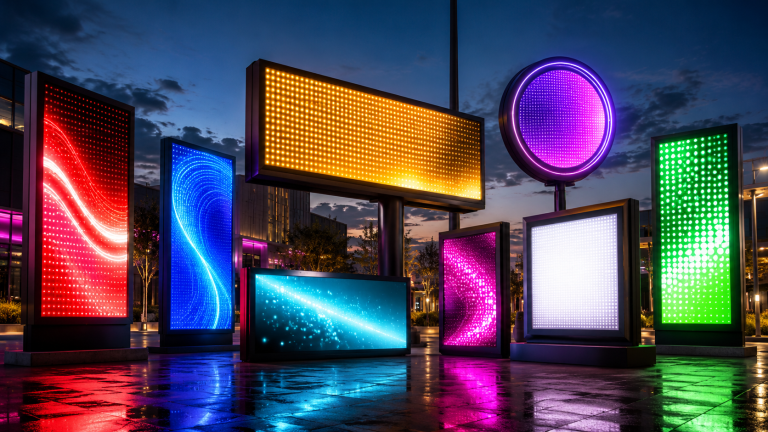


















Alpha LED sign boards are great for anything from churches, to schools, to business. They tend to do great in large open spaces, where they are clearly visible.
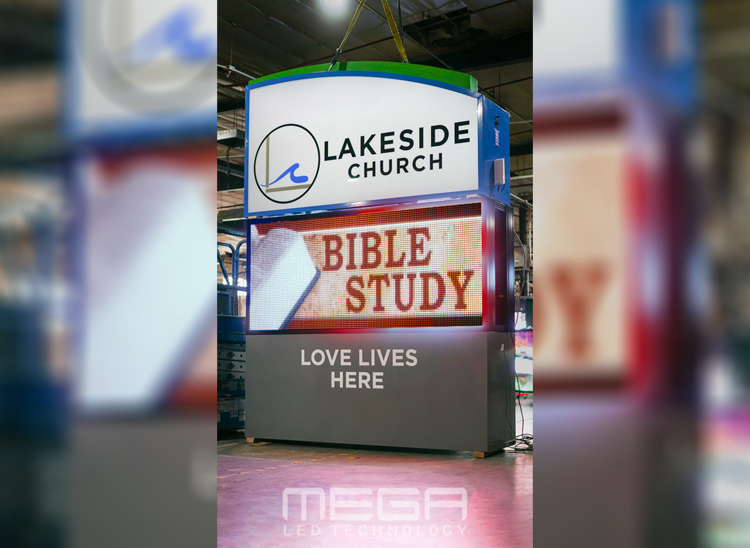
Omega is our newest line of outdoor digital signs. Running the full gambit from cabinet, to LED sign, to logo on top, or any configuration of your choice!
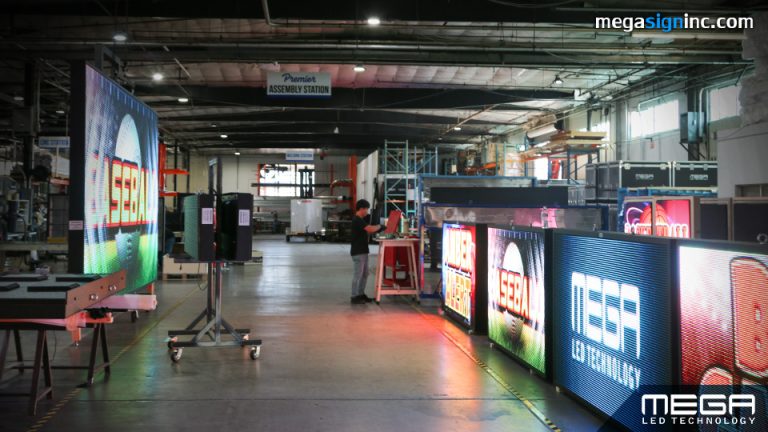
Premier is a customizable Outdoor LED sign, perfect for the Entrepreneur who knows that large custom sized signs cultivated for their specific business is the way to go.
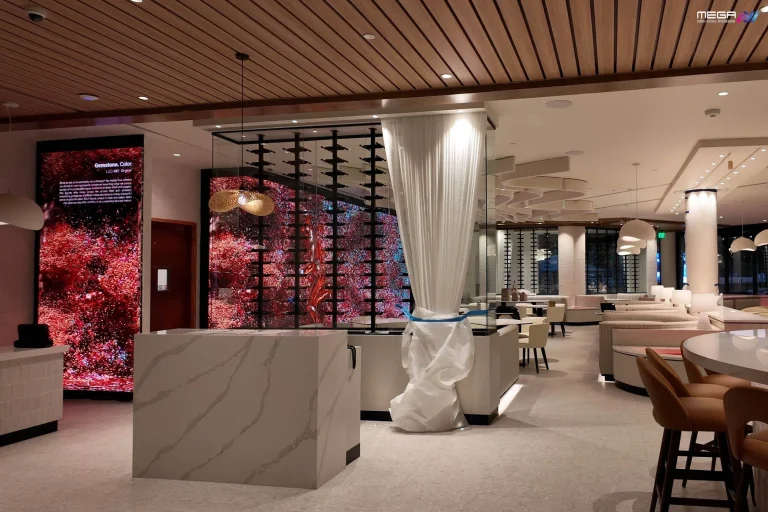
Programmable Stage LED signs, great for indoor assemblies, congregations, and presentations! Blow your competitors out of the water, or keep your congregation and audience glued to your message.